-
The MOPAR Culture 1971: The People … The Stars … The Cars
Tuesday, Mar 23, 2021
Celebrating its 84th birthday in 2021, MOPAR® now encompasses the portion of Stellantis brands (the parent company) that …
Show MoreCelebrating its 84th birthday in 2021, MOPAR® now encompasses the portion of Stellantis brands (the parent company) that includes, Chrysler, Dodge, Ram and Jeep – some automotive enthusiasts even envelope all 14 Stellantis badges as Mopar, but it wasn’t always that way.
The term “MoPar” was first used by Chrysler in the 1920s and was introduced as a brand starting in 1937. The name "MoPar", a derivation of “Motor Parts,” was created by marketing executives to use on cans of “Chrysler Motor Parts” antifreeze. The term has since become an inclusive word for any Chrysler-built vehicle—most any Chrysler, Dodge, Plymouth, Imperial, DeSoto or RAM, and often includes AMC, Eagle and JEEP following Chrysler's 1987 buyout of American Motors Corp.
The change may have begun in the postwar years, when the division’s involvement with racing, coupled with internal efforts to develop high-output parts for production cars, merged the Mopar name to high-performance. Mopar has gone from being spelled “MoPar”, to “Mopar,” to the current “MOPAR®” after a 2002 logo redesign.
The Culture
Car culture is often defined as “a society or way of life characterized by excessive use of or reliance on motor vehicles.” But we think “excessive” is a wrong term … we define it as a “love or devotion to motor vehicles as an integral part of car fans’ and mainstream America’s lives and personalities.”Chrysler is considered by many to be the original pioneer of the “muscle car” boom in the post-war era following the Second World War. With its 300-horsepower Hemi V-8 engine introduced in 1955 C-300 production, the concept of sky’s-the-limit horsepower may have begun the Mopar culture.
Arguably, the strongest, most exciting and fervent Mopar culture era occurred 50 years ago, in the early 1970s, when Mopar was spelled in lower case, and was led by those who were brand loyal and who championed vehicles from Chrysler, Dodge, Plymouth, DeSoto and Imperial; and to whom the phrase "Mopar or no car" was a way of life. The culture included cars as well as items that have since become nostalgic collectibles, such as posters, T-Shirts, team jackets, logo items and hard-to-find parts.
The People
The car culture of the 1970s was led by “Baby Boomers,” who craved muscle and graphics. Excitement was their daily bread. But not taking a backseat in terms of who was buying and powering-up their street rides were the groups known as the Silent Generation and the Greatest Generation, specifically WWII and Korean War vets who lived through the Depression and craved excitement, horsepower and a device to stay young … embodied in their cars.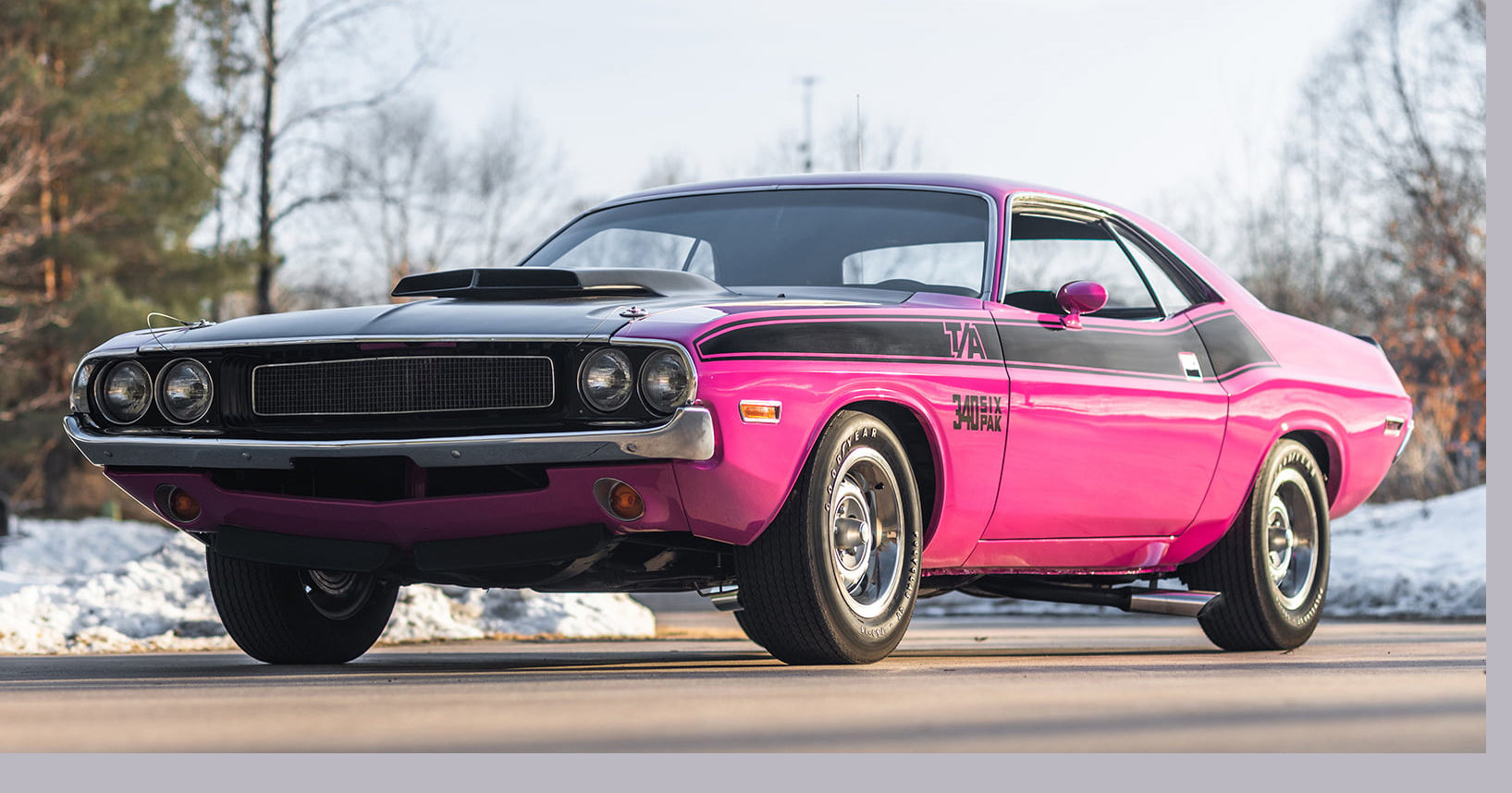 The “Mopar or no car” people … embraced horsepower and car wings, heralded Detroit’s Woodward Ave. drag racing, loved bright colors such as “Plum Crazy”, “Panther Pink,” “Go Mango”, “Sublime”, Sassy Grass” and “Top Banana”.
The Stars
Stars can be taken several ways … the celebrities who touted Mopar, the cars themselves that appeared on the screen, and the drivers who brought Mopar power to success and visibility on the track.In the world of entertainment, Mopar culture made its presence felt. On TV, Mopar culture was represented by spokespersons Robert DeNiro for the AMC Ambassador in 1970, Don Knotts -- Dodge Tradesman “Strong Box” truck, and William Shatner -- 1971 Plymouth Fury and Satellite in 1971.
TV shows that featured Mopars included: "Adam 12” -- 1966 Plymouth Belvederes and Satellites as well as AMC Matadors; “Breaking Away” -- 1967 Coronet and 1972 Charger; “Chase” -- 1970 Plymouth Satellite; “Mannix” -- 1968 Dodge Dart GTS convertible customized by George Barris, 1970-71 Plymouth ‘Cuda convertibles; “Mission Impossible” – everything from a 1968 Dodge Charger, to Dodge Polaras, Dodge Coronets, Chrysler Imperials and New Yorkers; and “The Mod Squad” -- 1970 or 1971 Challenger R/T convertibles. For 1972, both the “Mannix” ‘Cuda convertible and the “Mod Squad” Challenger convertible from the previous season were converted to look like 1972 models because Chrysler stopped production of all convertibles after 1971. The same goes for the Barracuda from “The Brady Bunch” as well as the Challenger from “Medical Center.”
Dodge sponsored “The Beverly Hillbillies” and “Lawrence Welk”; Chrysler sponsored “NBC Adventure Theatre”, “NBC Action Playhouse”, “NBC Comedy Playhouse” and “NBC Comedy Theater”.
In movies, the big stars were the 1968 Charger in “Bullitt” with Steve McQueen, the ’69 Charger in “Dirty Mary, Crazy Larry” and the 1970 Challenger’s appearance in “Vanishing Point.” There are many others, but these are regarded as some of the most famous Mopar muscle cars to grace the silver screen.
Mopar track and street racing stars were many, and included some household names and some lesser known, but just as important, Mopar drivers.
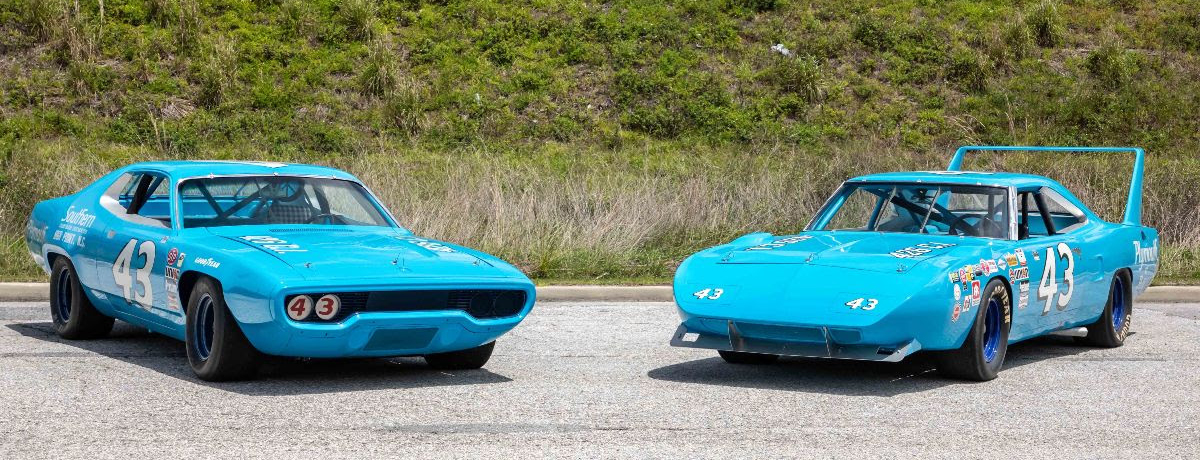 Richard Petty -- A tried-and-true Mopar fan, Petty once stated, “If you cut me, I still bleed Pentastar Blue”. “King Richard” Petty, the Hall-of-Fame face of NASCAR for many years, piloted a 426 ci. Hemi-powered 1970 Plymouth Superbird to 18 wins and 31 top finishes in the 1970 NASCAR season, and a 426-Hemi 1971 Plymouth Road Runner to the 1971 Daytona checkered flag, 21 race wins and 38 top-five finishes.
Bobby Allison – Bobby Allison ran his Dodge Charger Daytona in NASCAR events and while he switched rides often, his Mario Rossi winged Dodge was iconic.
Buddy Baker – Buddy Baker became the first driver ever to exceed 200 mph on a closed course (at Talladega), and his blue Dodge Daytona rides were historic.
Don Garlits -- Drag racing’s “Big Daddy” Don Garlits introduced the Chrysler Hemi engine to the drag racing circuit. Garlits and his 1971 Hemi-powered rear-engine dragster known as Swamp Rat 14 won the 1971 Winternationals.
Don Prudhomme -- Don “The Snake” Prudhomme and his buddy Tom “The Mongoose” McEwen sold sponsorship rights of their two Mopar Funny Car drag racers to Mattel’s HOT WHEELS group. Prudhomme drove a yellow, Hemi-powered ‘Cuda and took many Top Fuel Funny Car drag events.
Buddy Arrington – NASCAR racer Buddy Arrington never won the checkered flag but ran Dodges and Chryslers competitively for 25 years. Among his race cars were Dodge Magnum, Chrysler Imperial and Dodge Mirada. Buddy Arrington was the last person to drive a Chrysler product in NASCAR’s Winston Cup Series, which he did in 1985.
Ronnie Sox -- “Mr. Four-Speed”, Ronnie Sox, made the move to Plymouth in 1965 and never looked back. The red, white and blue Plymouths of the Sox & Martin team were always a force to be reckoned with and Ronnie’s ability to shift a four-speed gave him an advantage over most of the competition. Ronnie was there for the beginning of Pro Stock in 1970 and won the championship in ’70 and ’71. The NHRA changed the rules for 1972 and the Hemi was defeated by a pencil.
Dick Landy -- “Dandy” Dick Landy’s blue, red and silver 1970 Hemi Pro Stock Dodge Challenger was his main ride and his team drove a Hurst Hemi Dart, a ’68 Charger R/T and Coronet R/T … all to the winner’s circle. Landy conducted performance clinics at Dodge dealers across the US much the same as Sox & Martin did at Plymouth stores.
Jimmy Addison – Jimmy Addison drove his 426-Hemi ‘67 Plymouth Silver Bullet GTX to become a drag racing legend on Detroit’s Woodward Ave. It was something that would never get past the suits and lawyers of today, but the Silver Bullet was actually supported by Plymouth as a way to show the brand’s dominance on the street and not just the track. It was ultimately all about sales.
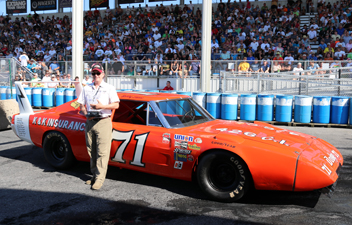
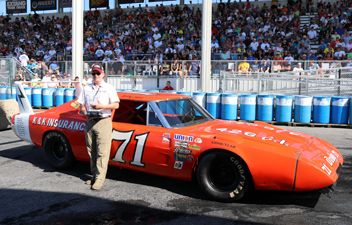
Bobby Isaac – Bobby Isaac had a successful NASCAR career and is best known for driving the No. 71 Dodge. At the Bonneville Salt Flats in 1971, Bobby Isaac set a land speed record in a 1969 Dodge Charger Daytona with its nose cone, rudders, and a 426 Hemi to break an average run record of 210 mph. Isaac literally walked away from NASCAR in 1973 at Talladega when he radioed for a relief driver during the race.
The Cars
During the 1960s, America’s car culture was muscle-oriented, with an emphasis on ponies, powerful engines, wings, smoking tires, street racing, tinted Plexiglas windows, hood scoops, raised front ends with beam axles and open headers. The 1970s saw less muscle as gasoline became precious and fuel prices soared. Fuel efficiency and emission laws reduced horsepower, but Mopar held on to performance longer than most. They also continued the excitement with cosmetic mods, a broad color palette -- “Vitamin C Orange”, Moulin Rouge”, “Curious Yellow” “Tor-Red”, “Hemi-Orange”, “Butterscotch” and “Light Turquoise”, for example -- external graphics and creative architecture.The cars were the REAL stars of 1970-1971’s Mopar culture and included, but were not limited to, the following:
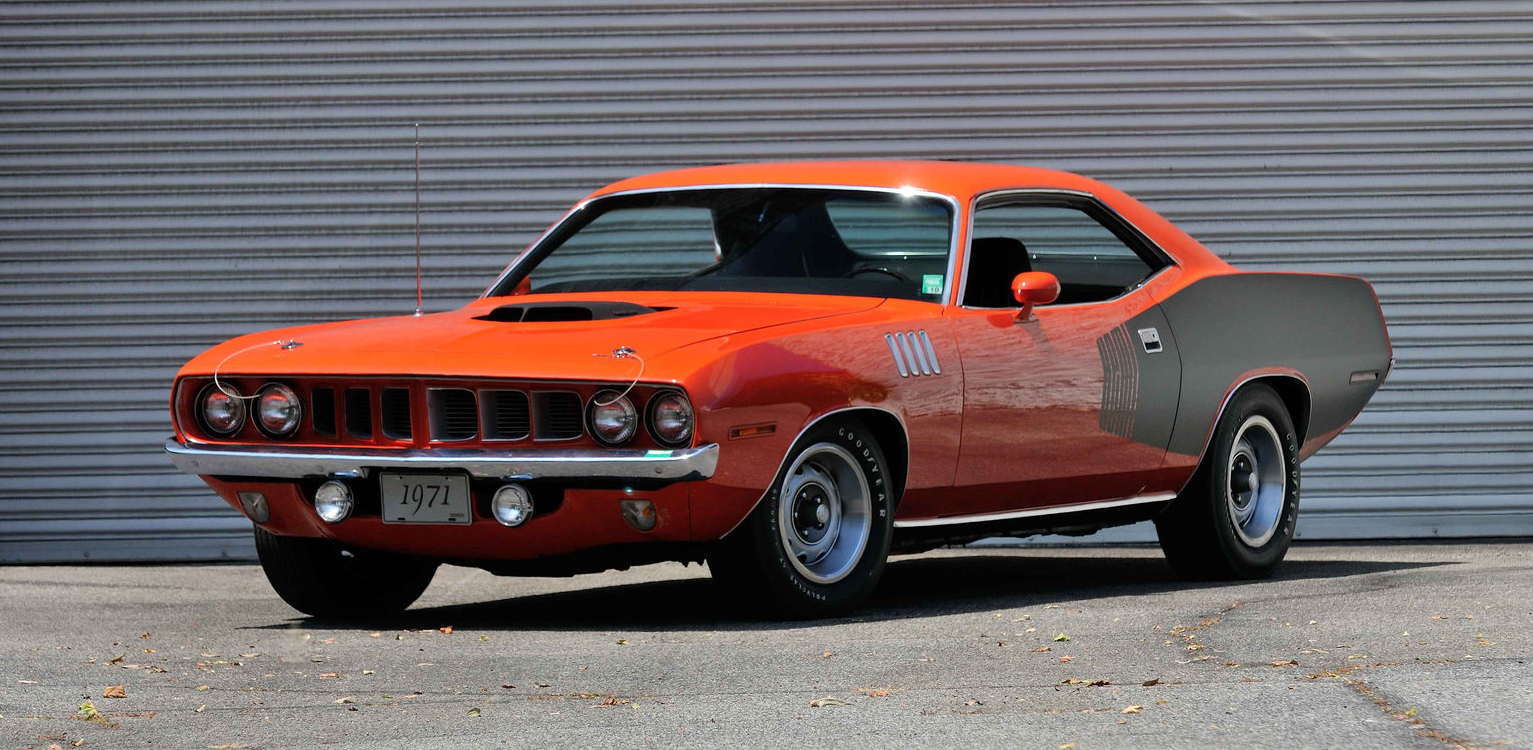 Plymouth ‘Cuda -- Considered by many to be the lynchpins of the classic days of the Chrysler muscle car culture are the Plymouth Barracuda and the 426 Hemi engine. In 1970, Plymouth presented up to 425 hp in a sleek street beast shell that came in vibrant colors and was one of the fastest, most iconic muscle cars ever. The new E-Body platform was specifically designed with a wider engine bay to accommodate the massive Hemi engine.
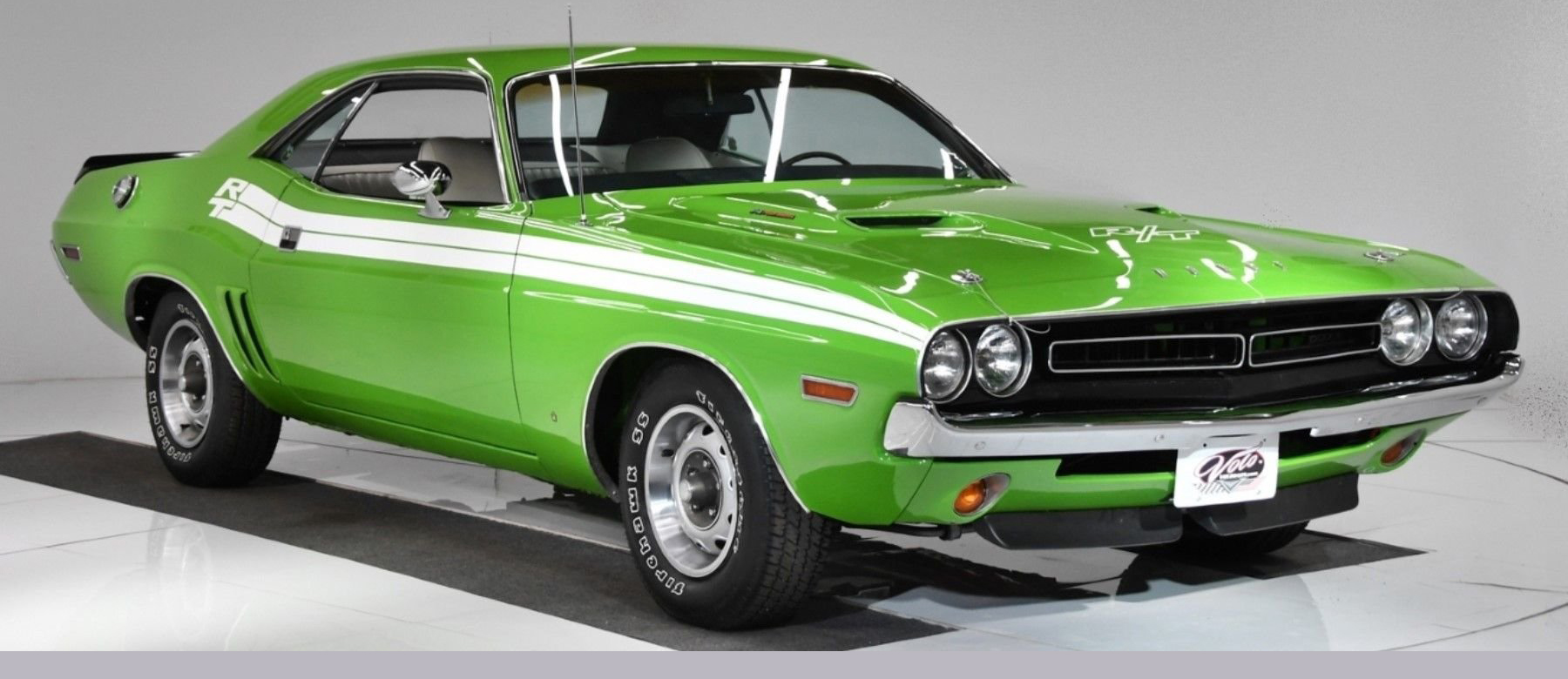 Dodge Challenger -- A sister to the ‘Cuda, with the same platforms, track widths, engines, and proportions, Challenger’s 110-inch wheelbase is two inches longer than the Plymouth’s and its overall length of 191.5 inches is three inches longer. The 1970 Dodge Challenger T/A and 1970 Plymouth AAR ’Cuda were the first American muscle cars with staggered tires—wider rubber in the back than the front …15-inch E60 white-letter Goodyears up front and wider G60s in back.
 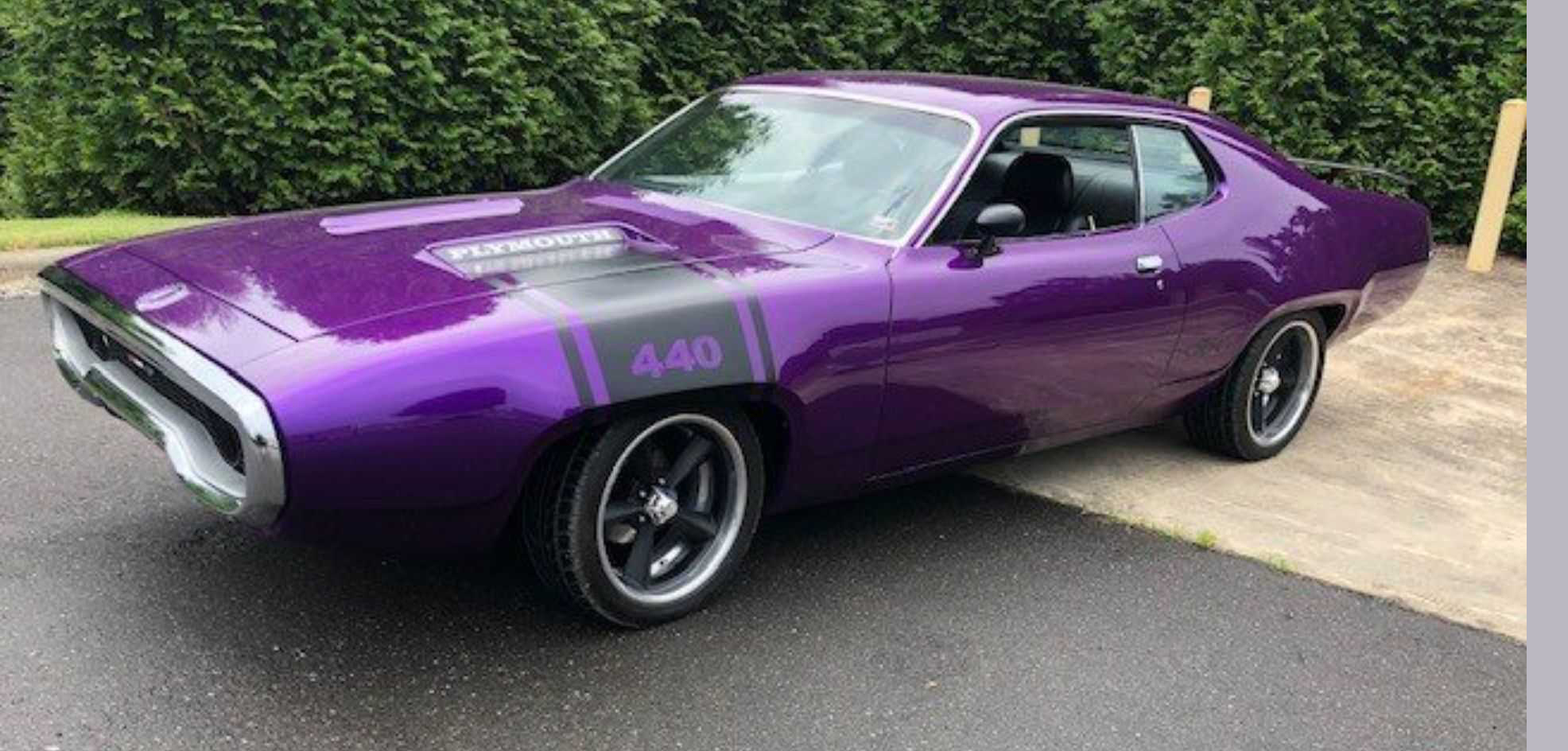 Plymouth GTX -- Plymouth introduced the GTX in 1967 as a luxury option in the Belvedere lineup to compete with the other luxury cars and was equipped with either a 440 Super Commando engine or the optional 426 Hemi.
 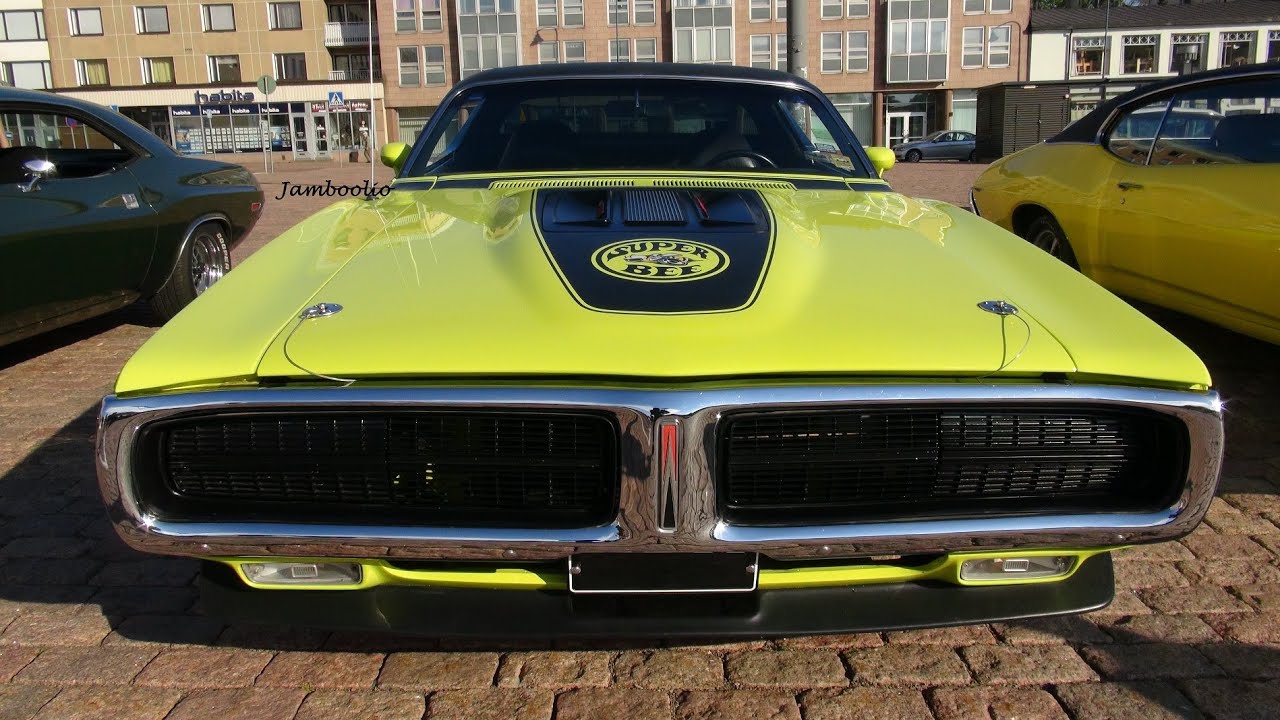 Dodge Coronet Super Bee -- The Coronet was an intermediate sedan in the Dodge lineup in the late ’60s, but the Coronet got a powerful engine, so it could be turned into a fast street fighter. Dodge presented the Super Bee model in 1968 as their answer to the Plymouth Road Runner and was outfitted with either a standard 383 or the 426 Hemi engine. The new 440 Six Pack engine, with three two-barrel Holley carburetors, became an option starting in mid-1969. The 440 four barrel was an option in 1971 only, the final year for the Super Bee.
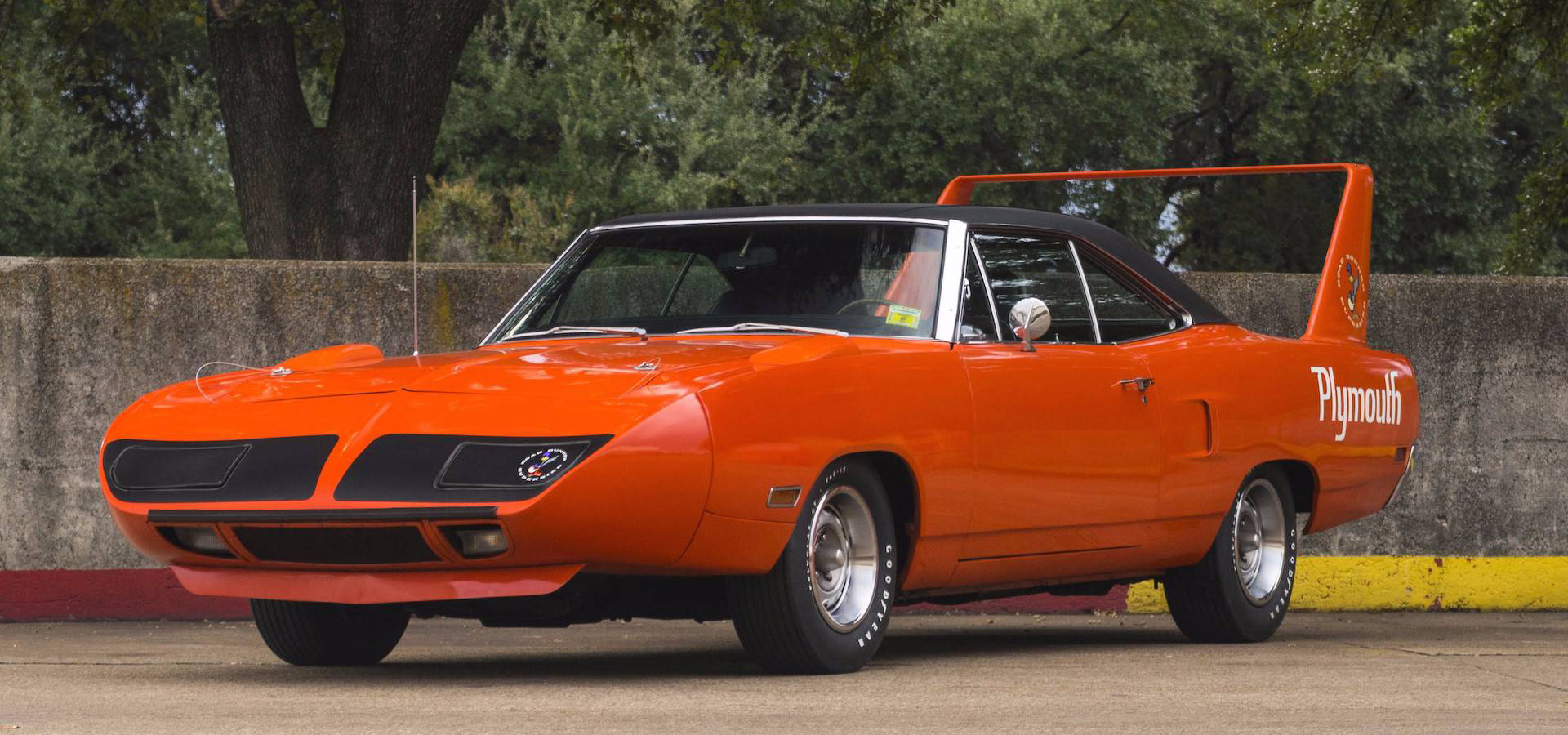 Plymouth Superbird – A unique muscle car built with aerodynamics in mind, and a nose cone, hideaway headlights and huge back spoiler. The rear glass deviated from the standard concave shape with a wind-tunnel-tested flush design. The Superbird was built in 1970 only and was Plymouth’s way to lure Richard Petty back to the brand after he switched to Ford for ’69. Much like the Hemi in Pro Stock in 1972, the Superbird was defeated by a pencil as NASCAR changed the rules to make the “wing cars” less competitive.
 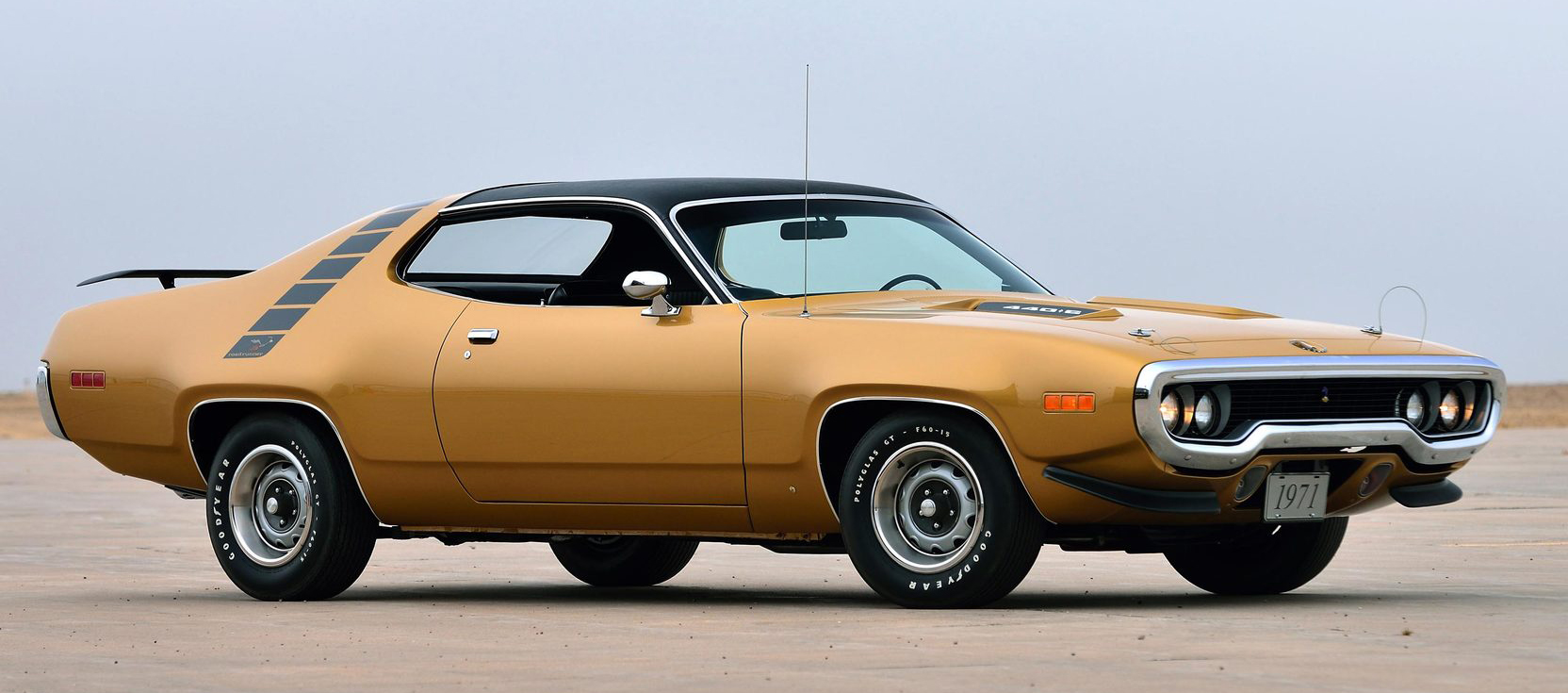 Plymouth Road Runner -- Road Runner models featured the animated bird character from Warner Bros. Road Runner was a low priced, creatively designed people pleaser with muscle. Road Runner started the trend as the first muscle car with creative graphics. The Road Runner had a bench seat, no luxury options, and manual steering, but was powered by a 383 V8 as the base engine, or Hemi 426. Just like Dodge’s Super Bee, the Road Runner received the 440 Six Barrel as an optional engine choice beginning in 1969 (Six Barrel is Plymouth’s name for an engine with three Holley two-barrel carbs).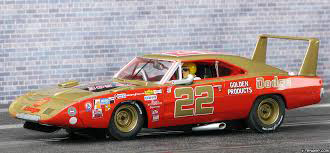
Dodge Charger Daytona – The Daytona was even faster at Daytona and Talladega NASCAR tracks than the Superbird. The Charger Daytona was one of the first cars developed in a wind tunnel using new materials in construction. The standard engine was a 440 V8 and had a 426 Hemi option.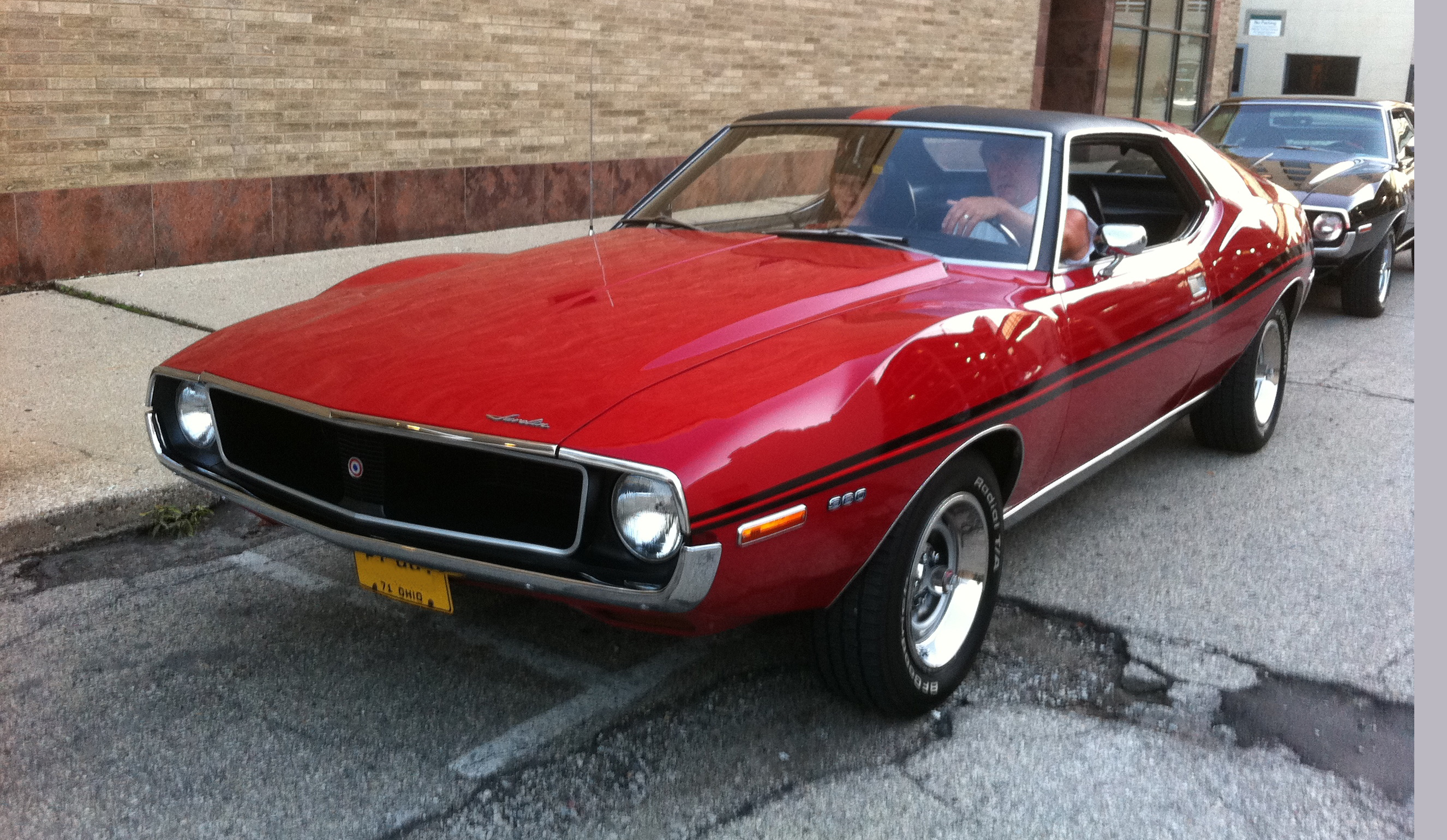 AMC Javelin -- American Motors hit the muscle scene from 1968-1970 with AMX and Javelin models. Tricked out with hip styling, AMX was a shortened Javelin with only two seats.
 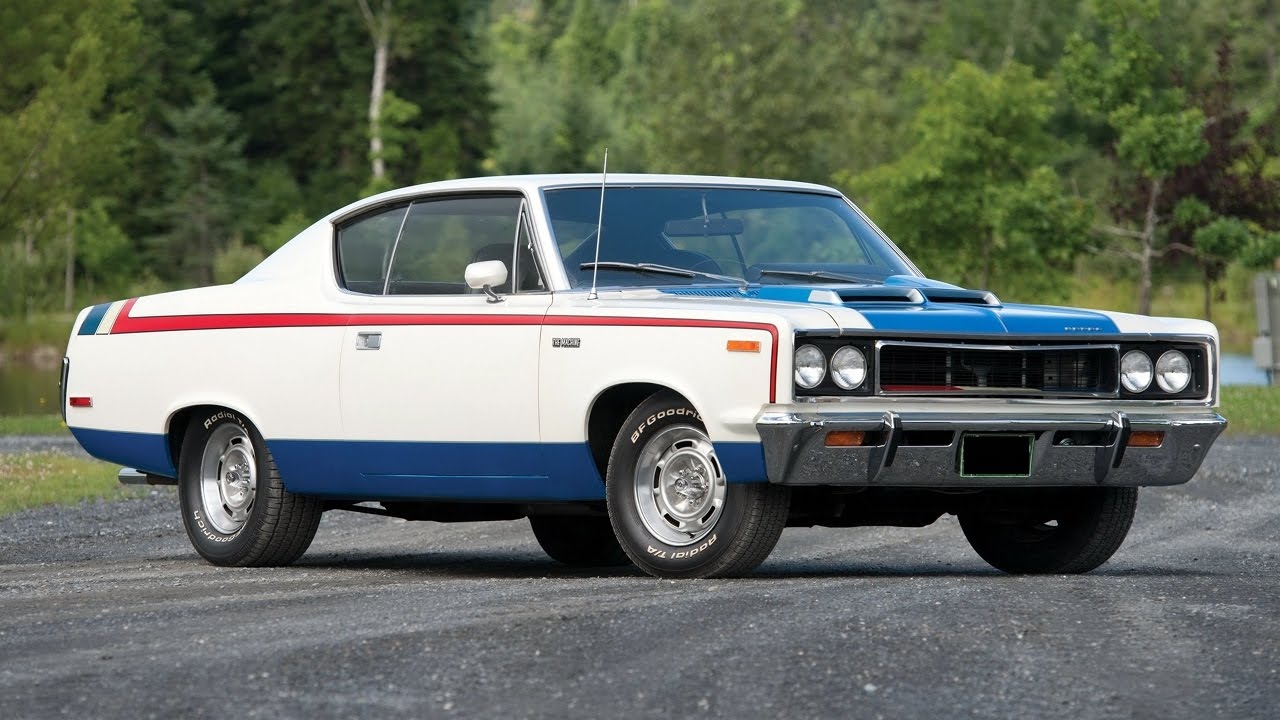 AMC Rebel – Once known as the Rambler Rebel, and replaced by the AMC Matador in 1971, Rebel’s top power model, “The Machine” was outfitted with a 340-hp 390 ci. V8.
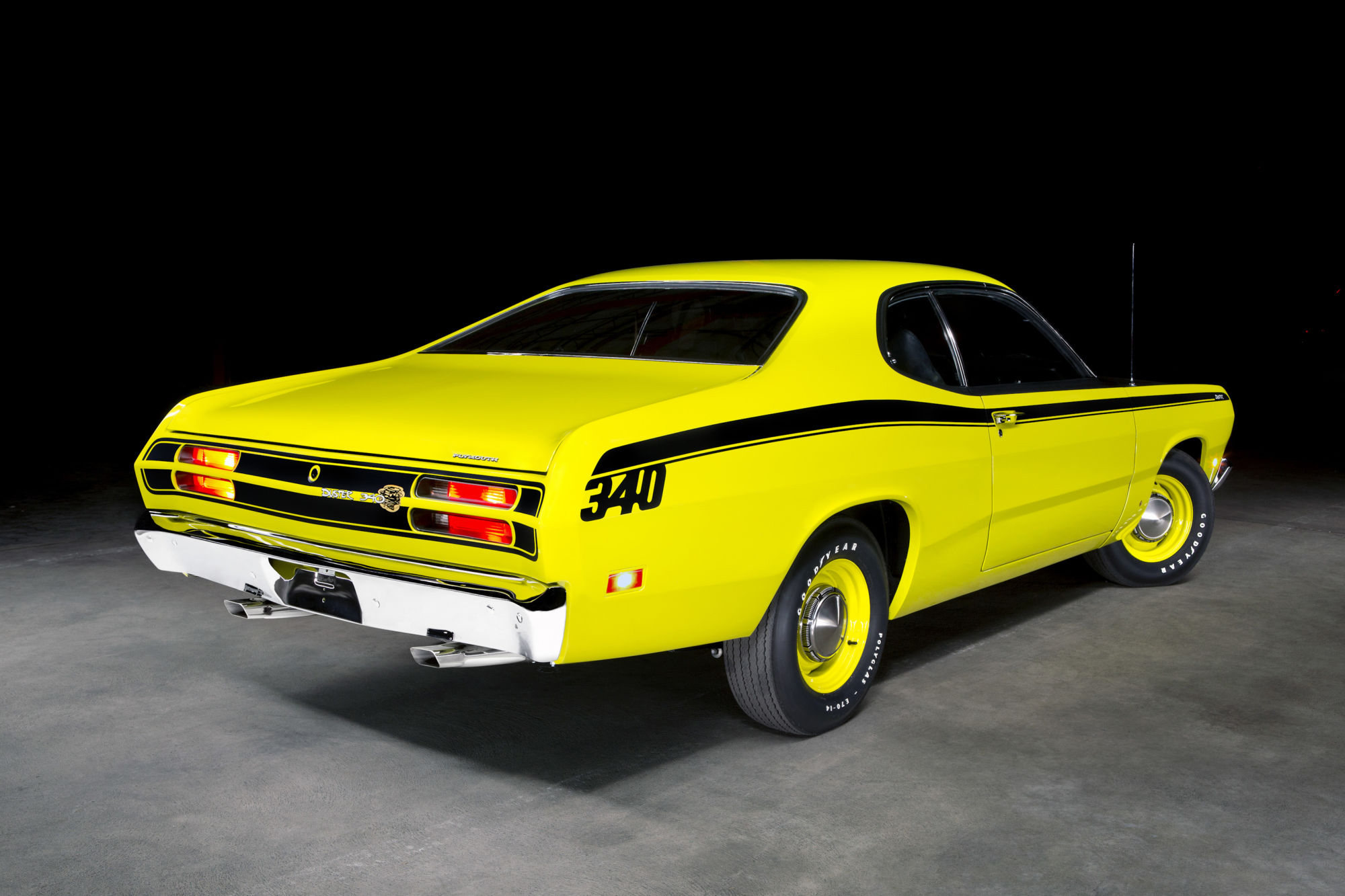 Plymouth Duster 340 – The Duster had all new sheet metal when it debuted in 1970 with its fastback styling, but underneath it was still a Valiant. In fact, in 1970, it was actually badged as a Valiant Duster. The largest available engine (1970-1973) was the 340. While never available with a big block, it’s no secret that a 340 Duster (or its Dodge sibling, the Swinger 340) when equipped with a 3.91 Sure Grip rear and a 4-speed transmission, could beat up on many big block intermediate cars.
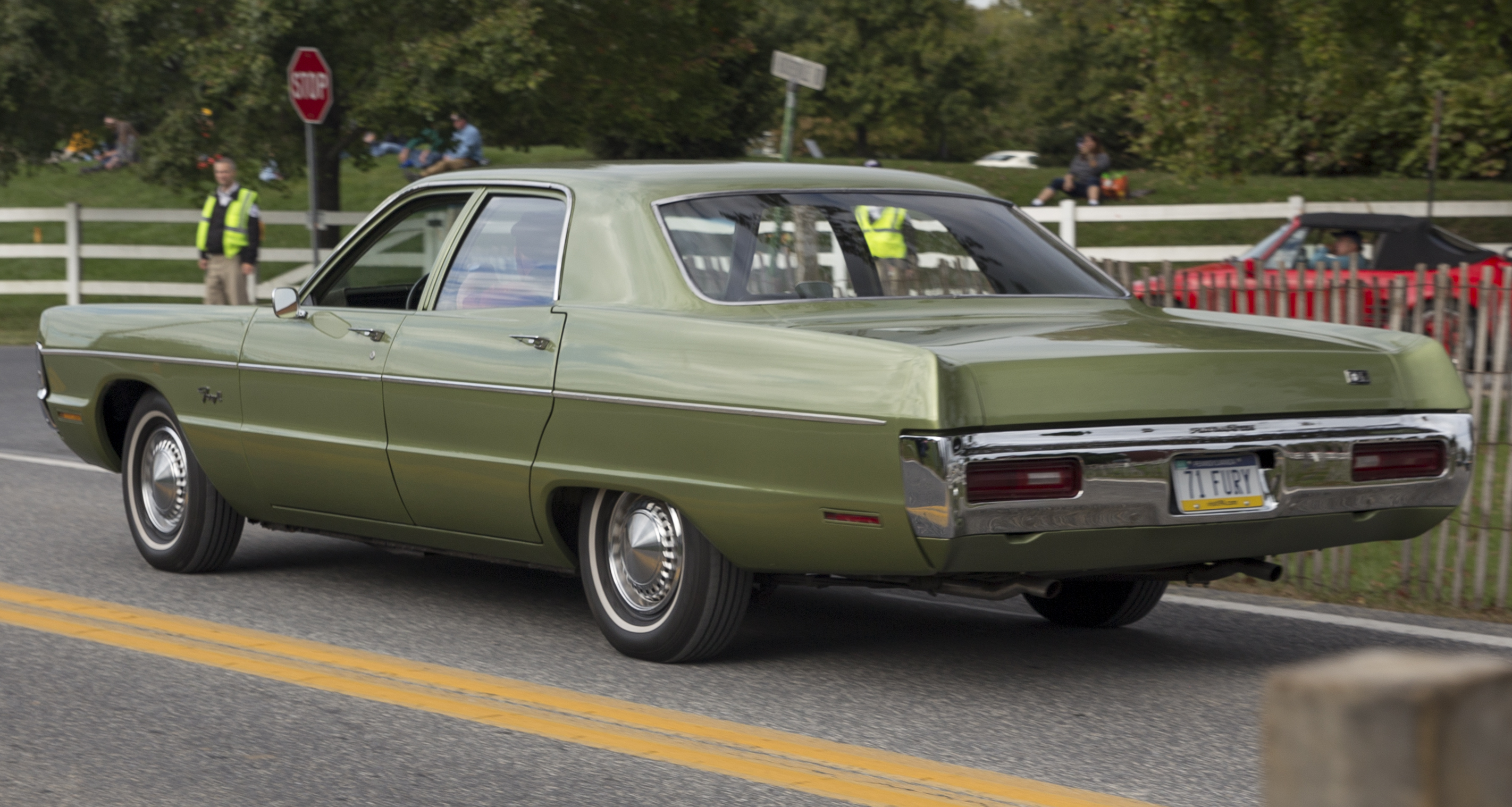 Plymouth Fury GT -- A two-door coupe version of the Fury sedan, it had full-on power with a 440 V8, 375 horses. The Sport Fury GT was full-size muscle at its finest. In 1970, a handful of Sport Fury GTs were built with the 390 hp 440 Six Barrel.
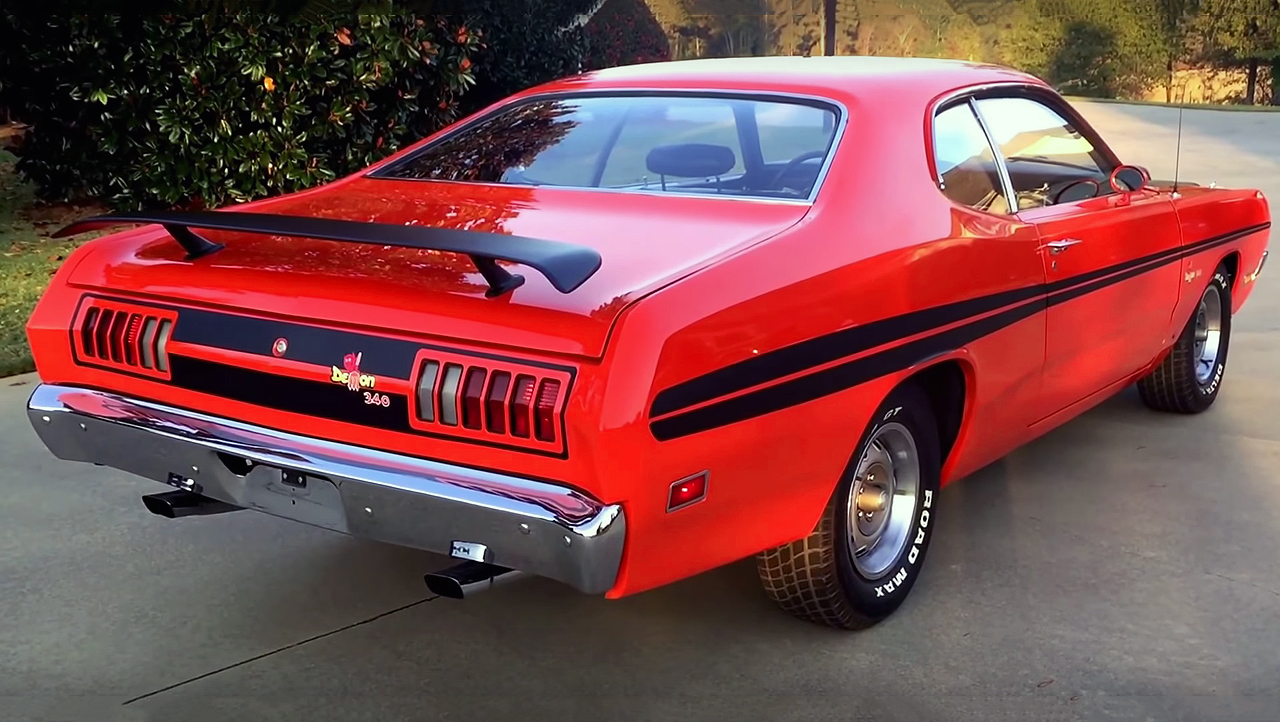 Dodge Demon -- The Demon was a new nameplate for 1971. The A-body Dodge Dart Demon for 1971 was offered with a 198- or 225-ci. Slant Six or the 318 V-8 engine, but it soon earned a reputation as a low-buck supercar in Demon 340 trim. The Demon started life as a Plymouth Duster shell, save for the Demon-only taillight panel, with Dodge Dart front sheet metal. Even the side marker lights and the wheel lips didn’t match from front to back because of the blending of the two different brands. But that never stopped the Demon from becoming a favorite among the Mopar faithful.
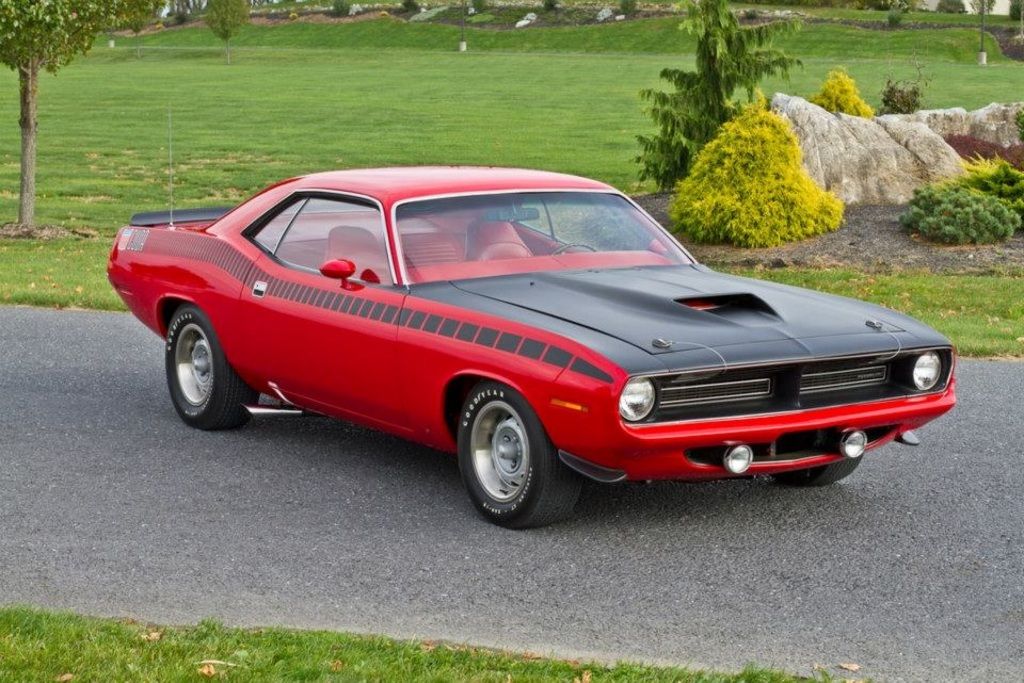 More ’Cudas – The Plymouth Barracuda 440 V8 was a monster pony car, with 375 horses and a tight build. The AAR ‘Cuda was a limited-production model to commemorate Dan Gurney’s All American Racing team, which used ‘Cudas in the Trans Am championship. It came with a 340 V8 small block, with three two-barrel Holley carburetors, a rear spoiler and unique side graphics that included the big AAR logo.
 That’s a quick look and you can see all variations of Mopar culture as a showcase of 1971 Mopar muscle at the Carlisle Chrysler Nationals at Carlisle, PA Fairgrounds, July 9-11.
> Visit www.CarlisleEvents.com for more on the automotive hobby.
Mike Blake, former editor of KIT CAR magazine, joined Carlisle Events as senior automotive journalist in 2004. He's been a "car guy" since the 1960s and has been writing professionally for about 30 years.
-
Carlisle Events Welcomes eBay as Presenting Partner
Monday, Mar 22, 2021
Carlisle Events and its automotive flea market events have been a staple in automotive circles since 1974. Fall Carlisle, the flagship event …
Show MoreCarlisle Events and its automotive flea market events have been a staple in automotive circles since 1974. Fall Carlisle, the flagship event for the company and its slightly younger sister, Spring Carlisle, have been connecting buyer and seller with automotive pieces, parts, collectibles, merchandise and more for decades. Meanwhile, the internet as we know it began to take shape in the ‘90s and with it, online shopping anchored by eBay (launched in 1995). While there are many outlets that offer both in-person car events and online shopping, there aren’t two bigger options than Carlisle Events and eBay. Beginning with Spring Carlisle (April 21-25), Carlisle Events and eBay come together to bring an infinite array of options to the consumer, while also helping to bring the consumer up to speed with all that eBay has to offer.
eBay will be recognized as the presenting sponsor of Spring Carlisle and Fall Carlisle. In addition, eBay joins great partners like A&A Auto Stores, Amsoil, Meguiar’s, RockAuto.com and American Collector Car Insurance as official season-long sponsors.
eBay and Carlisle Events have roots dating back as early as 2000. eBay Motors launched and soon thereafter, introduced their online marketplace to Carlisle Events as an official sponsor in 2002. For many years after, they worked directly with Carlisle Events and showgoers on the ins and outs of buying and selling online. Since the initial partnership, online buying and selling various products has become commonplace, including by every one of the aforementioned Midway vendors and even Carlisle Events by way of an overstock merchandise eBay store.
Carlisle Events welcomes them back to share their online selling experience and be part of the overall market of buying and selling “car stuff.” Guests will find them and their marketplace experts on the midway at many events this season. While at Carlisle, everyone is encouraged to learn more about continued sales once in-person events conclude, all while eBay’s 24/7 online market remains open, benefiting everyone, not only at Carlisle but around the world!
“Online marketplaces through websites and applications, such as our partner eBay, are a fixture of business today,” noted Ed Scholly, director of Business and Event Development. “They exist as part of the overall market, which includes the communities, vendors and enthusiasts taking part in offline experiences such as Carlisle’s events. We are excited to see this convergence at Carlisle and further our online and offline connections as we buy, sell and trade throughout the year.”
“In light of eBay and Carlisle’s 20-year history, we’re thrilled to be returning as an official sponsor of Spring and Fall Carlisle,” said Ron Jaiven, GM of eBay Motors. “eBay and Carlisle share a longstanding dedication to helping auto enthusiasts everywhere find exactly what they’re looking for – and as eBay continues to evolve its offering to make both the selling and buying experience better and simpler, we’re as committed as ever to delivering an unparalleled experience on the marketplace, surfacing the unique and not so unique vehicles and parts and accessories that motors enthusiasts are coveting.”
Carlisle Events is COVID-19 compliant and follows current guidelines suggested by state officials as well as the Centers for Disease Control (CDC). A detailed Health/Safety Measures summary is available on CarlisleEvents.com. While on the web, be sure to learn more about Spring Carlisle, register to become a vendor, sell in the car corral, or purchase discounted spectator tickets in advance of the event or call 717-243-7855 to learn more today.
-
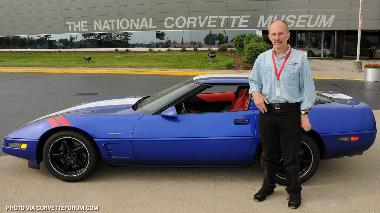
Grand Sport Registry Welcomes Builder, Racer and Grand Sport Legend John Heinricy
Sunday, Mar 21, 2021
Corvettes at Carlisle and the Corvette community have marveled at the design, power and elegance of the Grand Sport since the “first five” were int …
Show MoreCorvettes at Carlisle and the Corvette community have marveled at the design, power and elegance of the Grand Sport since the “first five” were introduced in 1963. 2021 Corvettes at Carlisle (August 26-28), presented by Top Flight Automotive, celebrates 25 years of the consumer-based Corvette Grand Sport. This display will not only highlight some of the best from the 1996, 2010 and 2017 offerings, it welcomes the Grand Sport Registry (GSR) to the event AND special guest, retired GM Engineer, John Heinricy.
The Grand Sport Registry is an active automotive enthusiast organization with approximately 800 members dedicated to all things Corvette Grand Sport related. Its mission is to help owners and enthusiasts get more enjoyment out of these very special Corvettes by sharing information and participation in local and national Corvette events. The group is a dedicated Lifetime Club Member of the National Corvette Museum (NCM) and Two-Acre Member of the NCM Motorsports Park. While its focus is on all generations of the Corvette Grand Sport, GS ownership is not required for membership. In addition to a huge Grand Sport Corral at the Fairgrounds, the GSR will host a Carlisle welcome party for its members, co-sponsor the Chip Miller Benefit dinner, and participate in the downtown Carlisle parade as part of its 25th anniversary celebration.
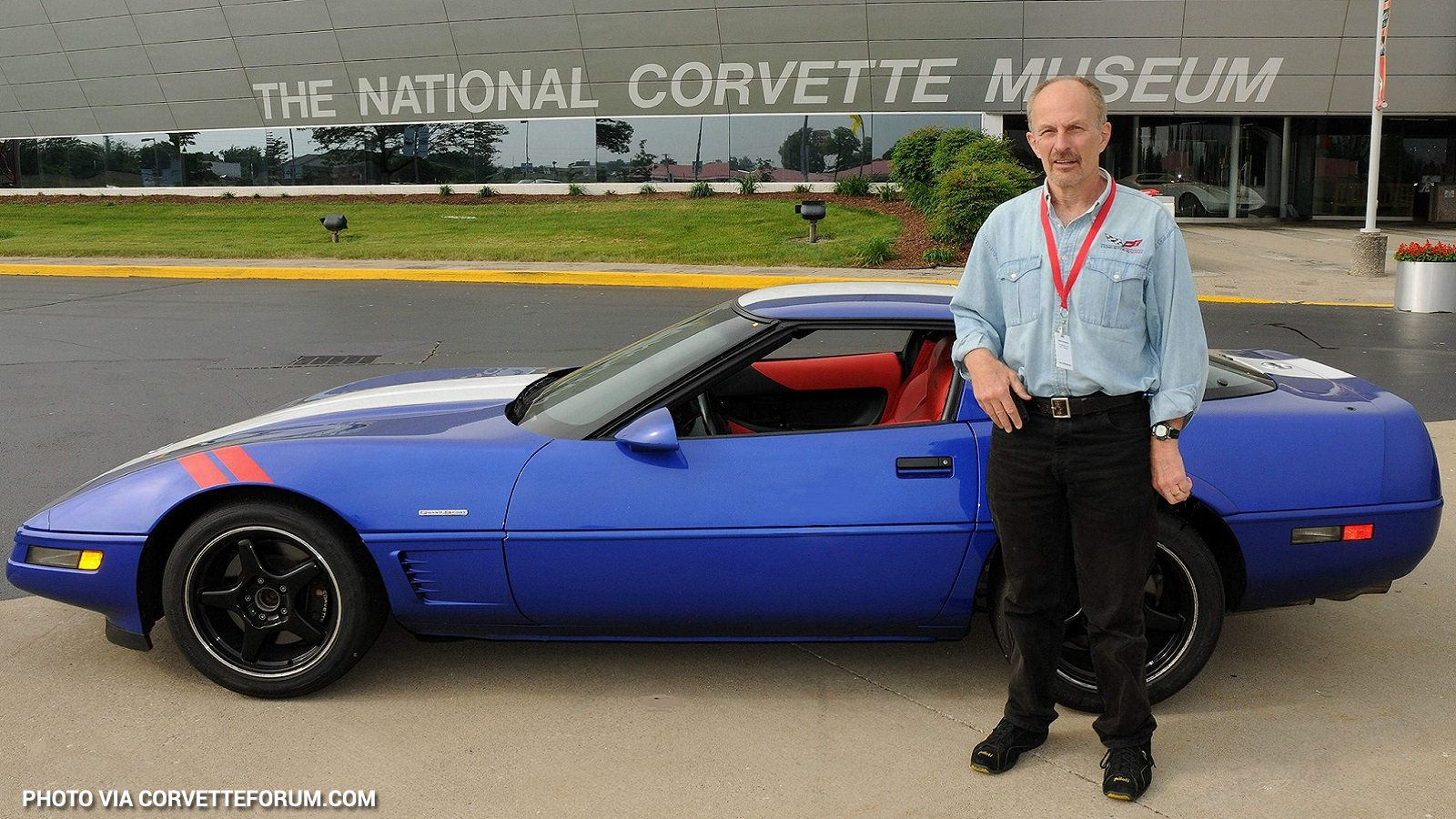
Heinricy is no stranger to Grand Sport fans, as he’s the owner of the first ’96 Grand Sport off the line…an iconic Z51 coupe which carries VIN #0001. This car WILL be available for display at Corvettes at Carlisle in 2021. To the faithful he’s known as the “Father of the Grand Sport,” working as the Assistant Chief Engineer for Corvette and Director of the GM Performance Division during the time of its production. Not only will he be available for guests to mix and mingle with, he’ll make a special appearance at the Grand Sport Registry tent, be part of the Chip Miller Amyloidosis Foundation dinner on Friday, August 27 AND he’ll be downtown in Carlisle as part of the returning Corvette parade and street party.
A job title and the first car of its kind only scratches the surface of Heinricy’s resume. An inductee into the NCM Corvette Hall of Fame, John has won 11 SCCA national championships driving a Corvette, was intimately involved in developing the Corvette showroom stock racing program and the Corvette Racing C5R effort. He was a key member of the team that set 12 international world time / distance speed records, averaging as high as 175.885mph over a 24-hour period. Most recently, “Heinrocket” set multiple lap records in a Cadillac CTS-V at tracks in China and the Middle East.
This appearance also includes autograph sessions Friday and Saturday along with a Q&A on Saturday at 11 a.m. within Building R. Heinricy’s appearance is just one of many special features at Corvettes at Carlisle in 2021. In addition, don’t miss every generation of Corvette, 50 years of the 1971 Corvette, a nod to law enforcement by way of the Chip’s Choice display in Building T, the incredible NCRS Gallery display plus the Solid Axle Corvette National Convention comes to town as does a 7-sanctioned NCCC judging field.
Carlisle Events is COVID-19 compliant and follows current guidelines suggested by state officials as well as the Centers for Disease Control (CDC). A detailed Health/Safety Measures summary is available on CarlisleEvents.com. While on the web, be sure to learn more about the car show, register to become a vendor, sell in the car corral, or purchase discounted spectator tickets in advance of the event or call 717-243-7855 to learn more today.
-

Support of Project SHARE Continues in 2021 With Carlisle Events and Car Shows
Friday, Mar 19, 2021
Carlisle Events has been tied to various charitable groups for decades, be it the Salvation Army, Chip Miller Amyloidosis Foundation, United Way, W …
Show MoreCarlisle Events has been tied to various charitable groups for decades, be it the Salvation Army, Chip Miller Amyloidosis Foundation, United Way, Wounded Warriors, etc. In 2020, the company forged a partnership with Project SHARE of Carlisle as a means to help others during trying times related to the COVID pandemic. While the pandemic and its fall out may not be today what it was in 2020, there are still needs by groups like Project SHARE. As such, Carlisle Events and its throngs of car show enthusiasts will once again be supporting this local group by way of donations.
For 2021, donations will continue in person by dropping non-perishable items in a marked bin just outside of the main points of entry gates. The donation window runs “now” through the end of Fall Carlisle on October 3. Suggested donation items include canned fruit with no added sugar, low sodium canned vegetables, whole grains (like whole wheat pasta, brown rice and oatmeal), canned tuna and low sodium beans. In addition, financial donations may be processed through the Project SHARE website or even more conveniently by TEXT by texting the words CARLISLE EVENTS (case does not matter) to 44321. From there, donors can select their support level to help nourish the community that hosts and entertains them annually.
Project SHARE’s food pantry helps community-based programs that strengthen the cornerstones for a good quality of life. This includes education, financial stability, health and basic needs.
“Project SHARE’s vision is ‘Nourishing Our Community…Awakening Hope,’” said Bob Weed, CEO of Project SHARE. “Before and during this current crisis we have been providing nutritious food for our community in need,” continued Weed. “We continue to serve our entire community in need through our monthly distribution days and our weekly Farmstand location where fresh produce, eggs, milk and bread are shared with all. Safety and Nourishment remain our focal points in these days that we are moving through. We will continue to serve with the support and encouragement of our community.”
Secure drop box locations will be available and those who participate can donate before, during or after attending an event in Carlisle this year.
Learn more about Project SHARE online at www.projectSHAREpa.org or call their Carlisle offices direct at 717-249-7773.
Carlisle Events is COVID-19 compliant and follows current guidelines suggested by state officials as well as the Centers for Disease Control (CDC). A detailed Health/Safety Measures summary is available on CarlisleEvents.com. While on the web, be sure to learn more about Spring Carlisle, register to become a vendor, sell in the car corral, or purchase discounted spectator tickets in advance of the event or call 717-243-7855 to learn more today.
-
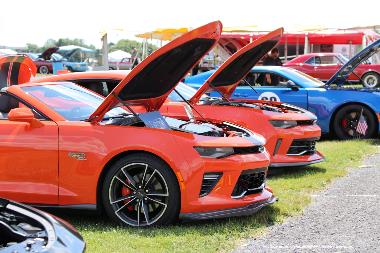
Chevrolet Camaro: Six Generations of Sportiness and Speed
Tuesday, Mar 16, 2021
Americans clamored for a muscular, powerful, sporty car for the street and for tire-smoking bragging rights in the early 1960s, and Ford answered t …
Show MoreAmericans clamored for a muscular, powerful, sporty car for the street and for tire-smoking bragging rights in the early 1960s, and Ford answered the bell with Mustang in 1964, launching the Pony Car Wars. Chevrolet’s stable of competing vehicles at that time was limited to the rear-engine Corvair and the Chevy II Nova, with “Super Nova” on engineers’ drawing boards. GM answered the call, attacked the genre, and in two years, put out a vehicle to compete for the 1967 model year … the Camaro.
Camaro began as Project XP-836, code-named “Panther”, but the vehicle was always intended, by Chevy leaders to have a “C” letter name to perpetuate the legacy begun by Corvair, Chevelle, Chevy II and Corvette. Legend dictates that when marketing leaders discovered a slang French word meaning “pal, friend or comrade,” Camaro was born (though “Camaro” is not recognized in the French language). When Chevrolet product managers were asked what “Camaro” means, they responded with “a small, vicious animal that eats Mustangs.” And The Pony Wars of American muscle was born.
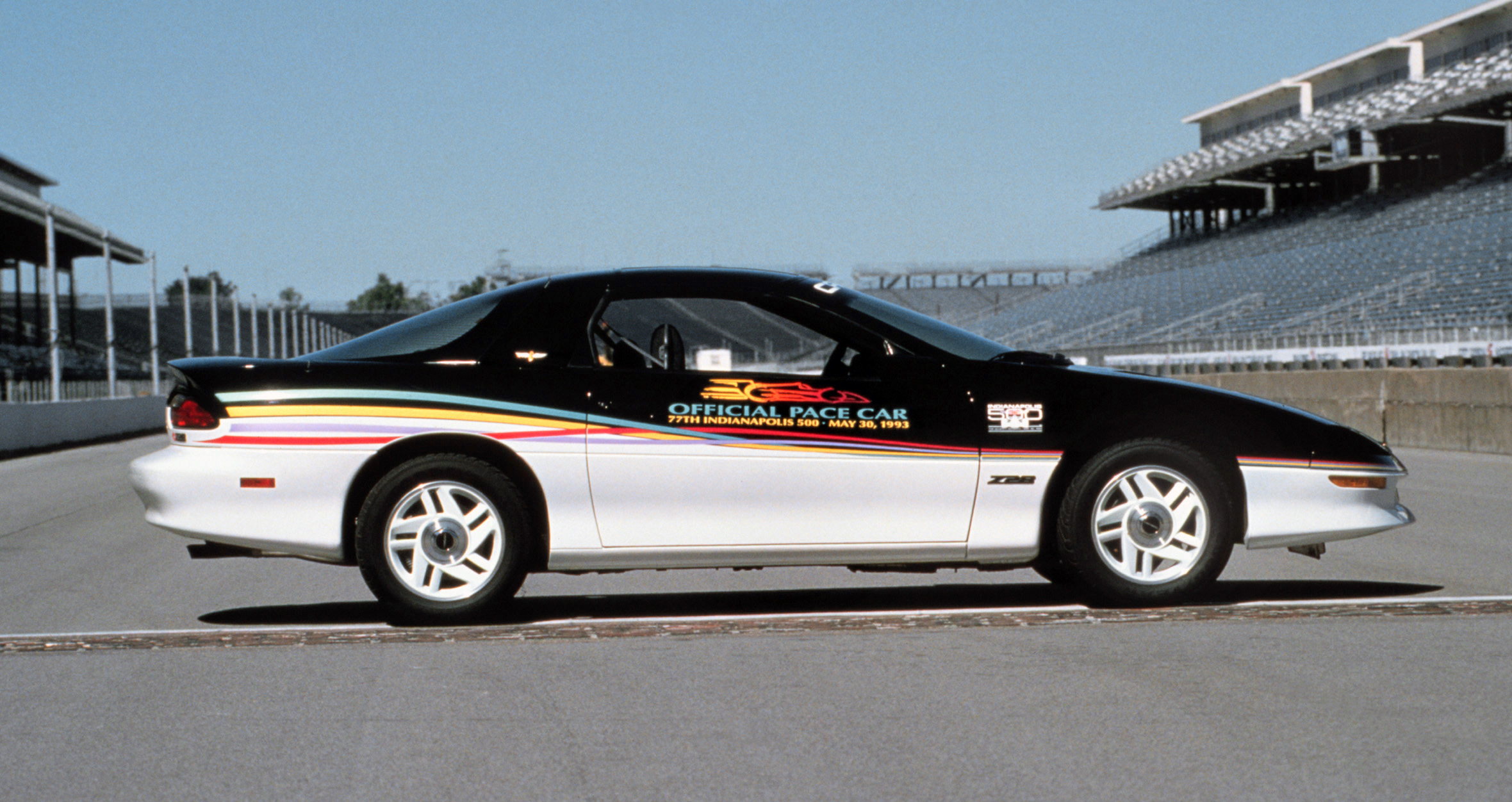
Down the boulevards, across the highways and on the track, Camaro enjoyed a stellar reputation for being sexy, fast and reliable. Camaro was one of the prominent vehicles in the SCCA-sanctioned Trans-Am Series, as Chevrolet contracted with Roger Penske to operate their "unofficial" factory-backed Trans-Am team. The team won the title in 1968 and 1969 with Mark Donohue behind the wheel, and Jim Hall’s Chaparral team replaced Penske for the 1970 season. Beginning in 1975, Camaro was the official car of, and used in the International Race of Champions until 1989, making it the first American car of the series. Camaro has been an Indianapolis 500 Pace car eight times, and a NASCAR Xfiniti Series, stock car since 2017.
Through six generations, 5.5 million Camaros have been sold, with its first four generations produced from 1967 through 2002, and its most recent two generations built from 2010 through the present. From its inception, Camaro has been fast, exciting, popular with the public and a frequent star of the Silver Screen, from appearing in “The Gumball Rally” in 1976 to “2 Fast 2 Furious” in 2003 to “Transformers” as “Bumblebee” in 2007, and dozens more featured roles.
Each of Camaro's generations has had its own Camaroesque personality and its own following.
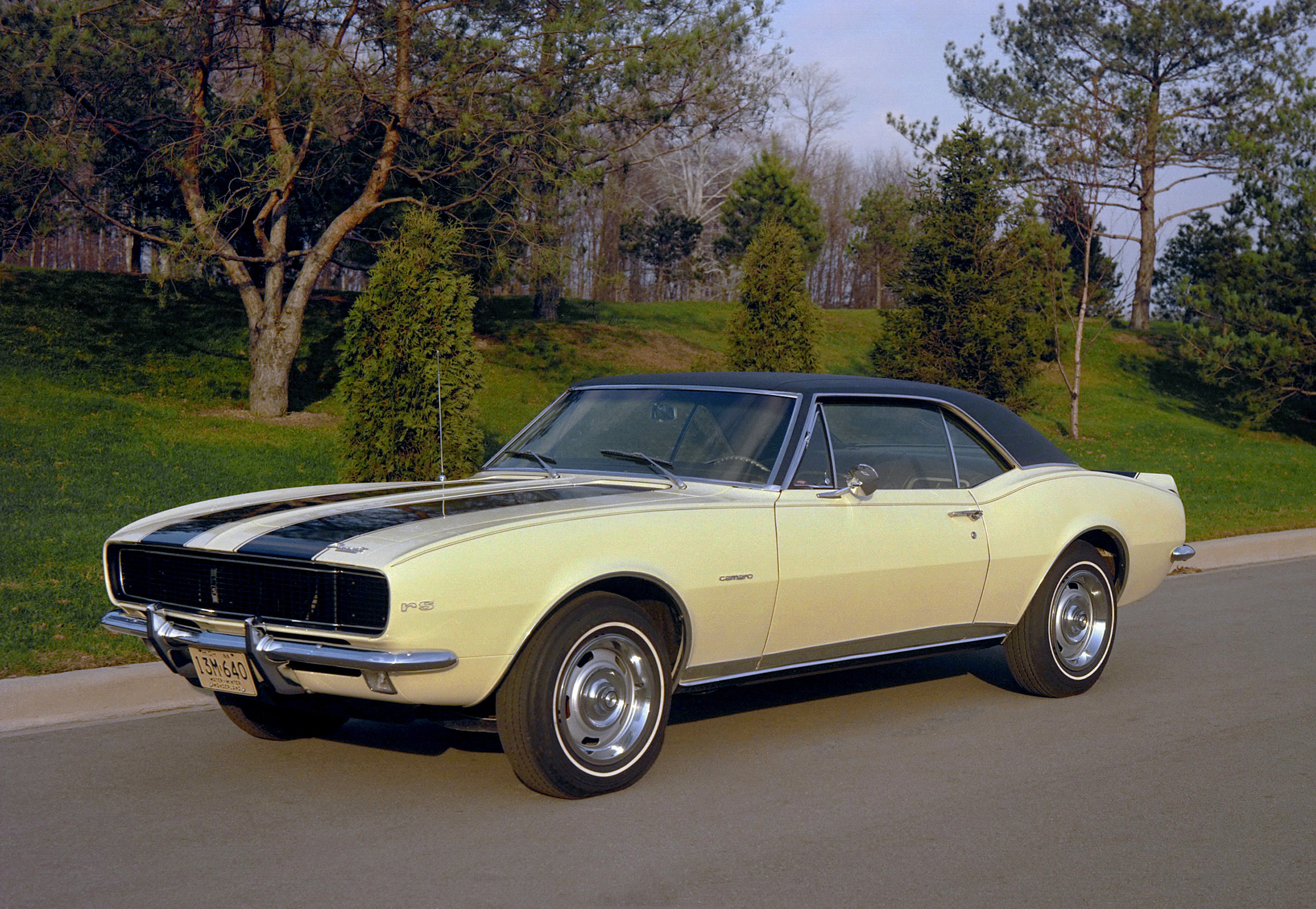 1967-1969
Hitting the streets in two-door coupé or convertible with 2+2 seating, and a choice of 230 ci., 250 ci. inline-6, or 302 ci., 307 ci., 327ci, 350 ci., and 396 ci. V-8s, on a new rear-wheel drive GM-F body that was eventually shared with the Pontiac Firebird. The First-Generation offered standard, Super Sport, and Rally Sport editions. Power during Gen-One ranged from 140hp for the 230 ci. Six-cylinder, to 425hp for a 427. The 427 could do a quarter-mile in 13 seconds, and the popular 327 was a 10.7 zero-to-60 mph car with an 18.2-second quarter-mile.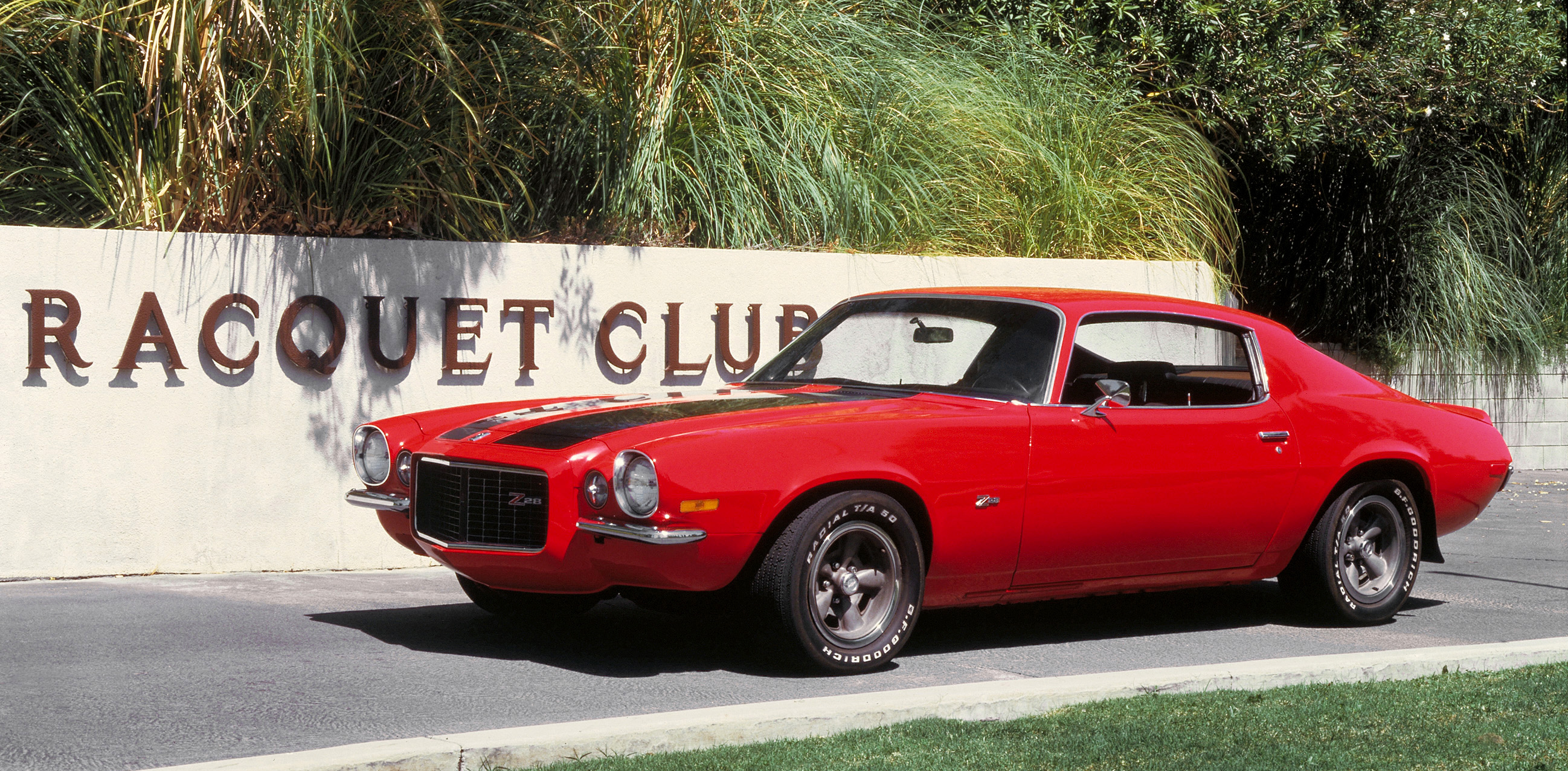 1970-1981
Restyled larger and wider for Gen-Two, the new Camaro had a similar frame, subframe and suspension, but later in the run in 1980 and ’81, Z28 models included an air induction hood scoop with an intake door that opened under full throttle. Engine size went from a 5.7-liter, 360-hp LT-1 engine to an emission-requirement drop in 1975 to only 155 horsepower. Track times were often disappointing at 11.0 seconds for a zero-to-60 run and a 17.4-second quarter mile. However, the Z28 could blast a 5.8-second sprint and a 14.2-second quarter.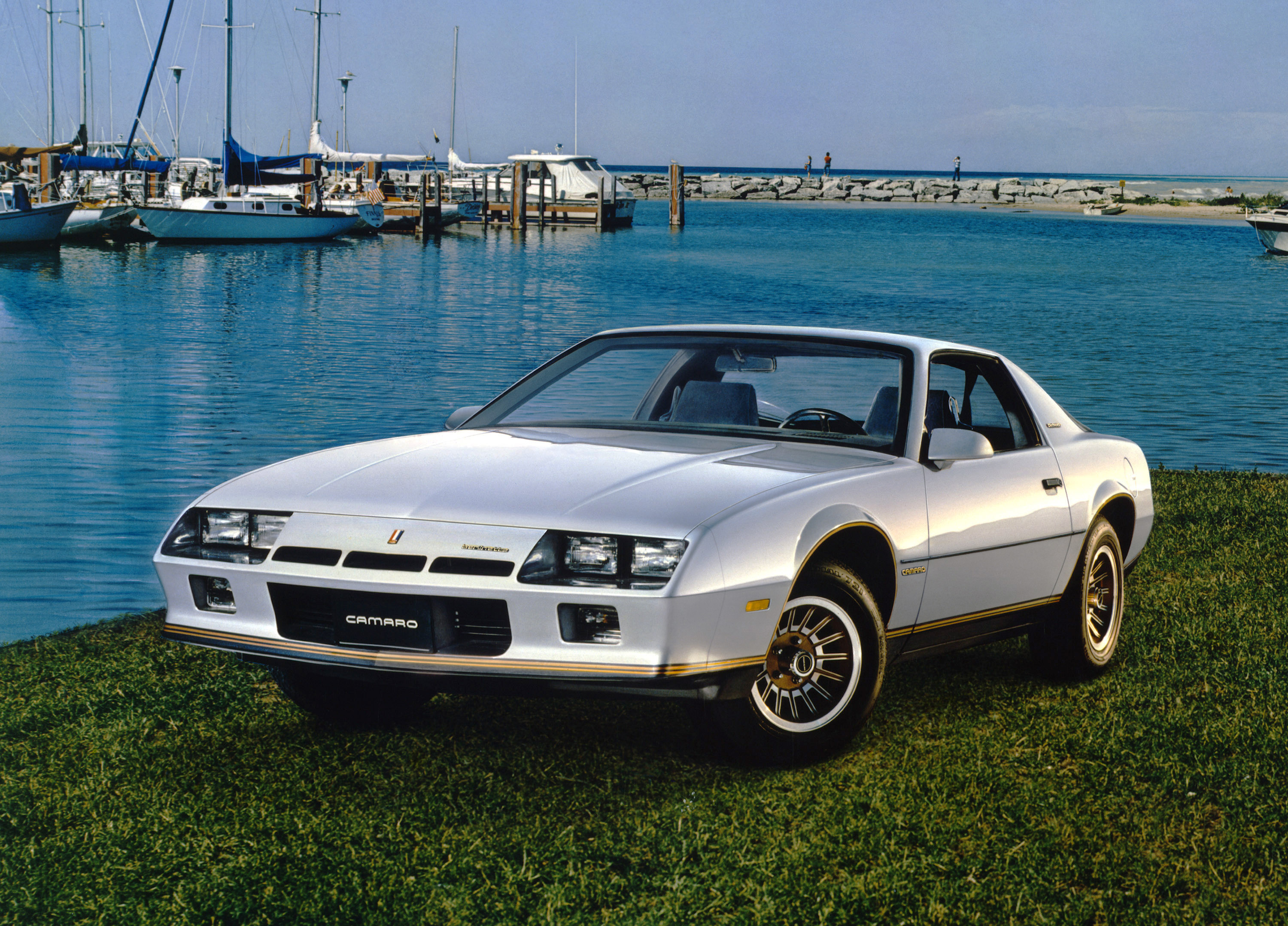 1982-1992
Gen-Three was the first Camaro with modern fuel injection, four-speed automatics or five-speed sticks, 14-,15- or 16-inch wheels, and hatchback models. The cars were nearly 500 pounds lighter than the Second-Generation model.Convertibles, discontinued in 1969, returned in 1987 and all base models were outfitted with a 2.8 L V6 (OHV). In 1985, the direct-injection 305 ci. small block V8 was available and in 1987, the L98 350 ci. V8 engine became a regular option on the IROC-Z. Top power models could track run at 8.6 seconds for the sprint and 16.4 for the quarter.
 1993-2002
Gen-Four saw an updated F-Body platform and returned to 1967’s coupé body style with 2+2 seating (with an optional T-Top roof) or convertible (reintroduced in 1994). The standard powerplant from 1993 to 1995 was a 3.4 L V6, and a 3.8 L V6 was introduced in 1995. The Z28 trim utilized Corvette’s LT1 275-hp 350 ci. small-block V-8 engine and in 1996-’97, a limited number of Camaro SS models came with the 330-hp LT4 small block from the Corvette, although most were equipped with the 275 hp LT1. Again, Z28s were speed performers with track times as quick as a 5.4 sprint and 14.0 seconds for the quarter-mile.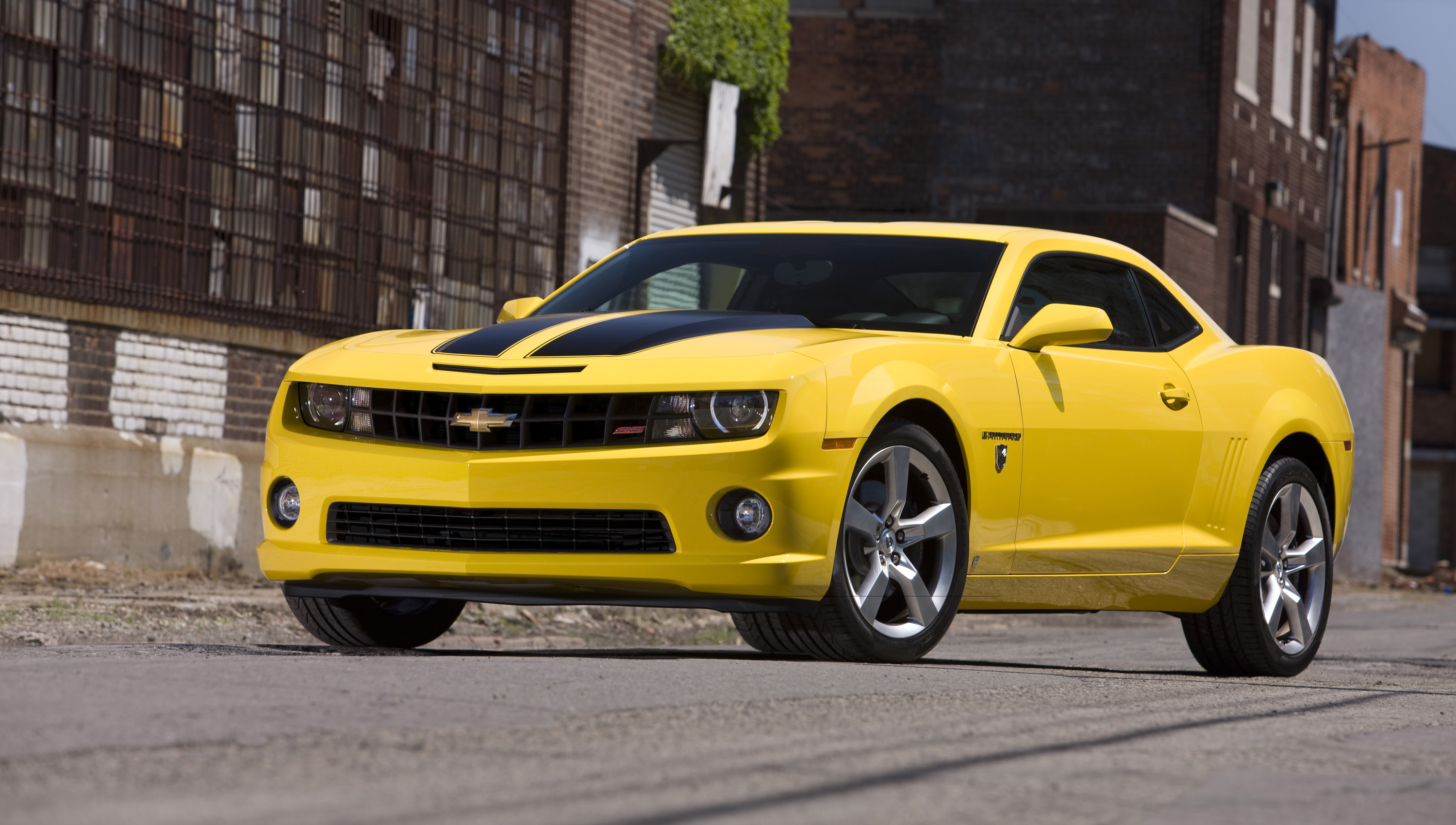 2010-2015
Bumblebee was the “Transformers” star and Camaro came back after an eight-year hiatus with a complete redesign. Gen-Five saw LS and LT models powered by a 3.6 L V6 producing 312 hp mated to either a 6-speed manual or a 6-speed automatic with manual shift. The SS had the 6.2 L LS3 V8 and 426 hp. Top stock Camaros could finish off a dash in 6.1 seconds and a quarter-mile in 14.5.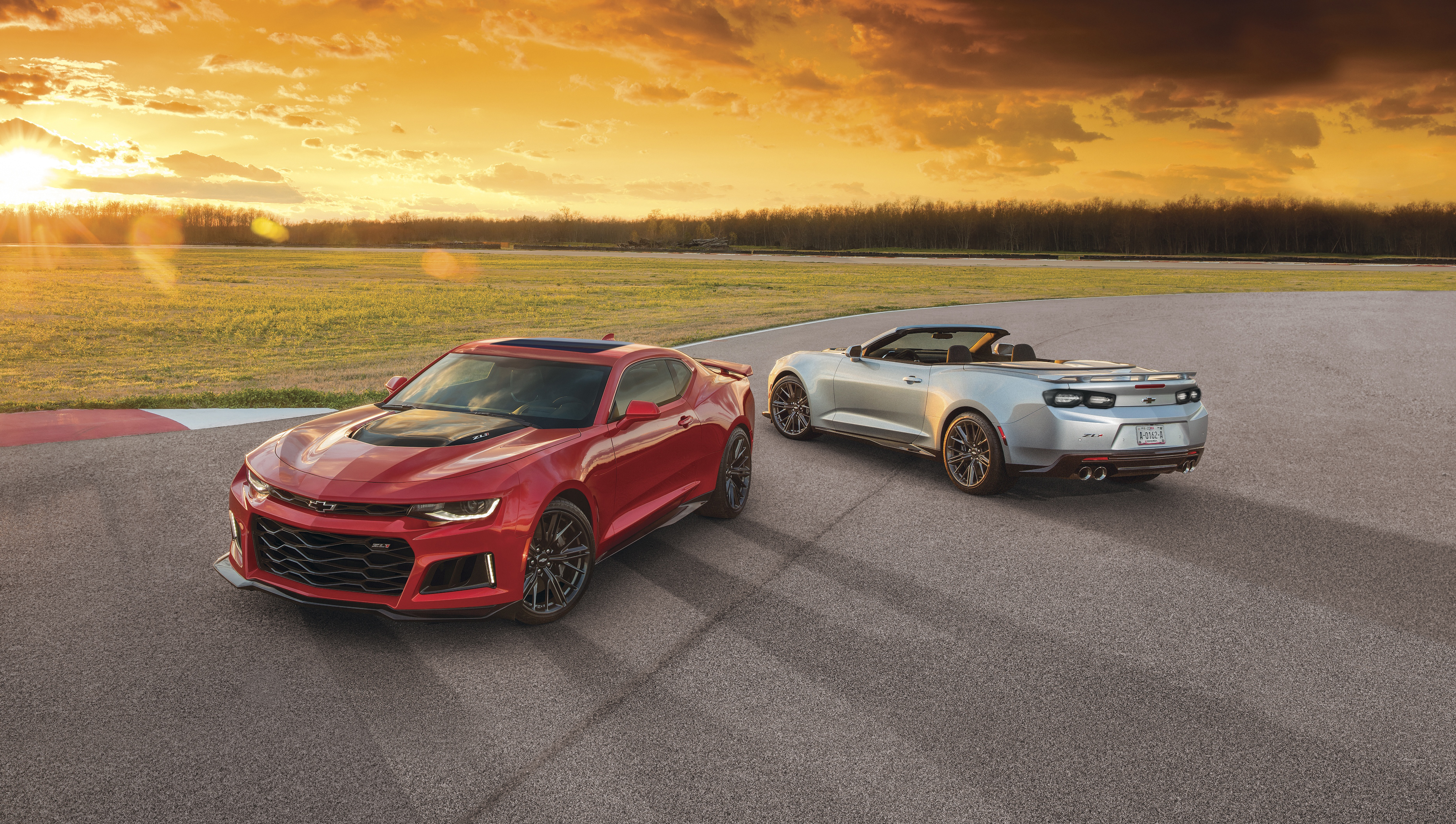 2016—present
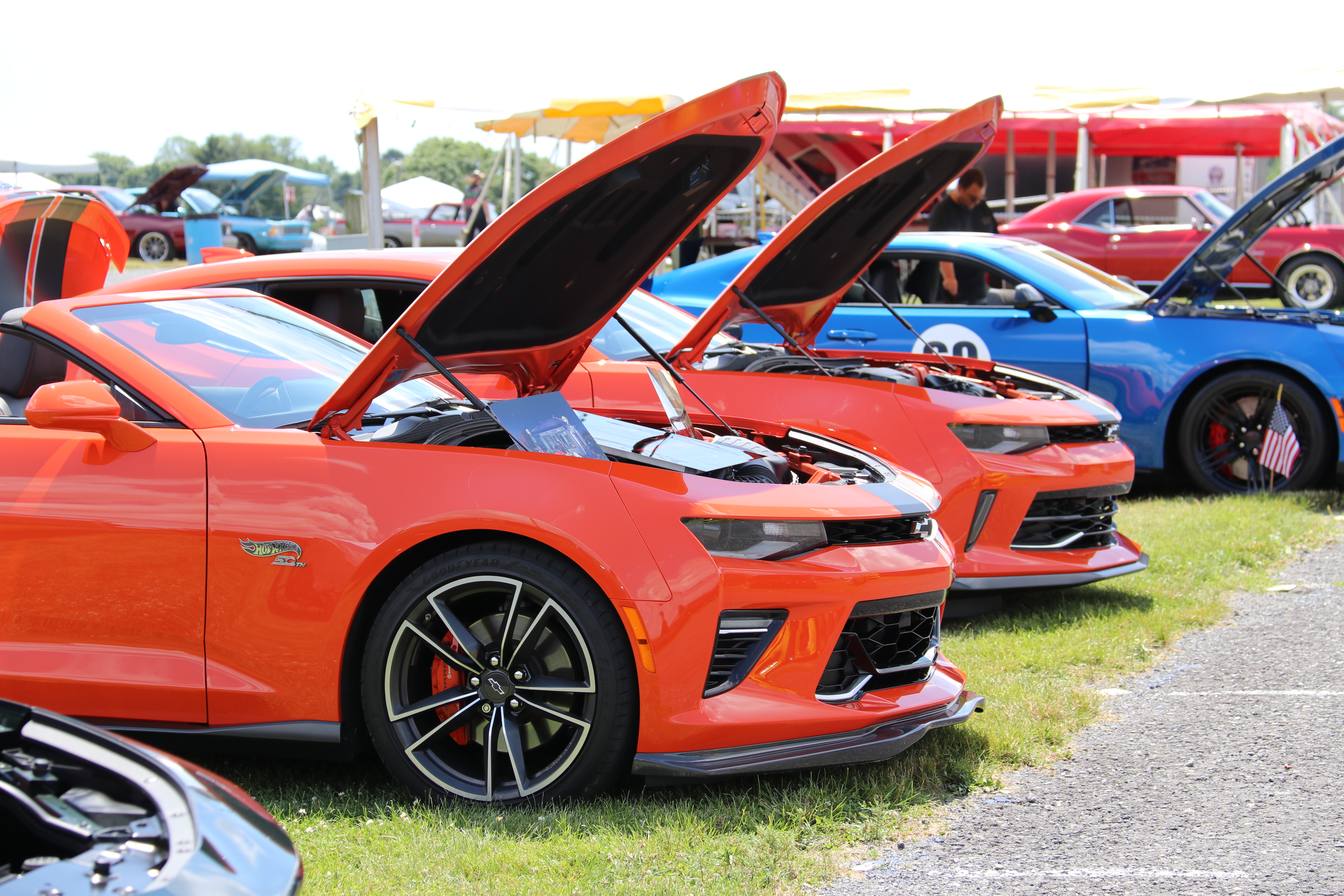
The Sixth-Gen Camaro, built on the GM Alpha platform, comes with such engine choices as a 275-hp 2.0 L turbo-charged inline-four; a new 335-hp 3.6 L V6 and for the SS trim, a 455-hp 6.2 L LT1 V8. The super-powered ZL1 has a supercharged 650-hp LT4 based on the Corvette Z06. For 2021, the ZL1 can blaze a 3.5-second zero-to-60mph run and a 12.2-second quarter-mile, and outfitted for today’s high-tech capability, they come with a rear camera, navigation, 8-inch diagonal color screen and all the connectivity demanded by today’s drivers.You can see all six generations of Camaro, as well as more than 1,000 GM cars that cross more than 100 years of GM history, at the Carlisle AGM Nationals, at the Carlisle, PA Fairgrounds, June 25-26.
> Visit www.CarlisleEvents.com for more on the automotive hobby.
Mike Blake, former editor of KIT CAR magazine, joined Carlisle Events as senior automotive journalist in 2004. He's been a "car guy" since the 1960s and has been writing professionally for about 30 years. </I>
Book with a preferred Hotel

Book online or call (800) 216-1876


.png?sfvrsn=8cce4cd8_2 "Parx Casino_Footer (125x125)")